

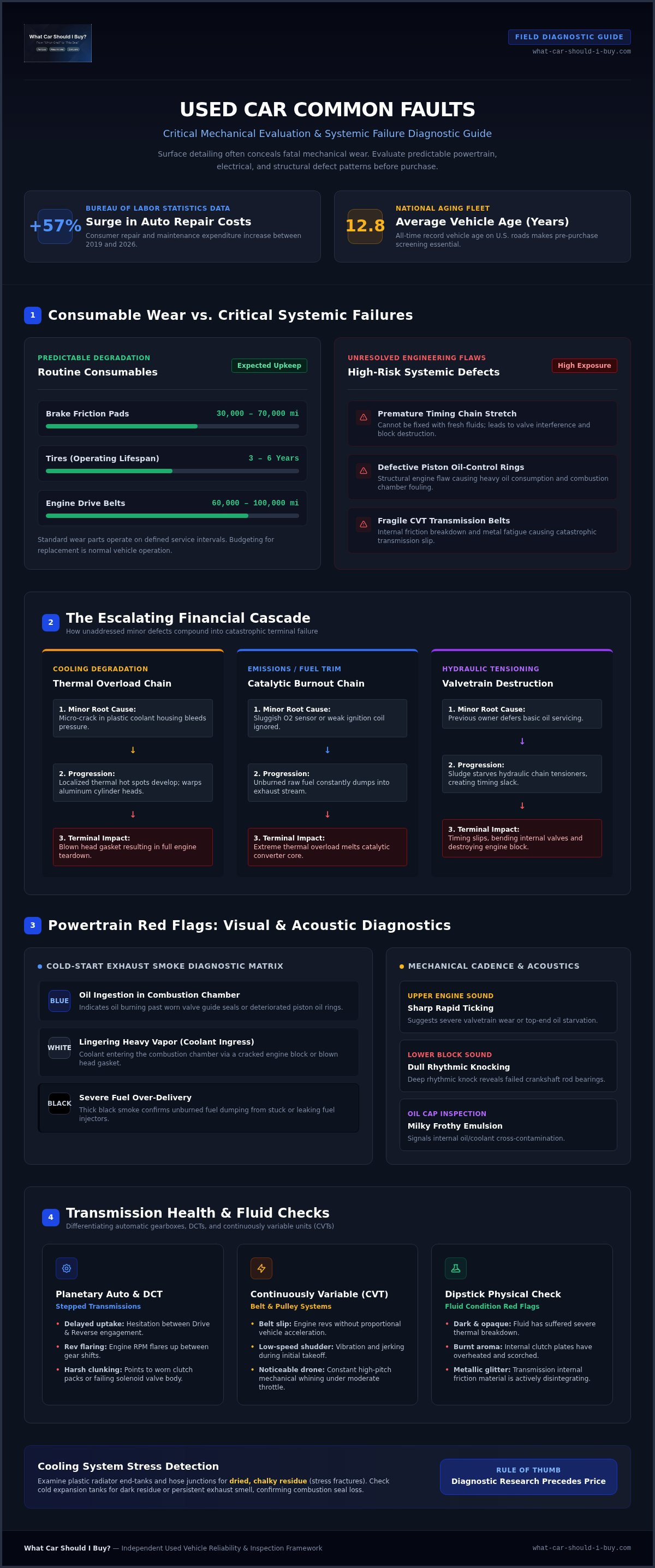
According to Bureau of Labor Statistics data, consumer auto repair and maintenance costs surged 57% between 2019 and 2026. With the average vehicle on U.S. roads now reaching a record 12.8 years, a pristine paint job won't protect you from steep shop bills. Identifying used car common faults requires looking past superficial detailing and evaluating predictable mechanical failure patterns instead.
It's completely reasonable to fear inheriting a failing transmission or a phantom electrical glitch right after purchase. Distinguishing harmless cosmetic wear from serious underlying mechanical damage is difficult, especially when you don't carry specialized diagnostic scanners to a seller's driveway.
You don't need a dedicated workshop to safeguard your hard-earned capital. This guide delivers an objective breakdown of critical powertrain, electrical, and structural failure points across modern used vehicles so you know exactly what to examine. Ahead, you'll learn how to spot telltale warning signs during test drives and systematically filter out chronically defective model generations before spending money on formal inspections.
Key Takeaways
- Distinguish between routine wear and high-risk used car common faults driven by known engineering design flaws.
- Identify early mechanical red flags across engines and transmissions, from cold-start rattles to subtle shift hesitation.
- Uncover hidden electrical gremlins and chassis degradation that standard visual walk-arounds consistently miss.
- Execute a structured, cold-engine inspection routine to evaluate fluids, belts, and components before the test drive begins.
- Screen out chronically defective vehicle generations using aggregate reliability data before spending time or money in the field.
What Are Used Car Common Faults: Wear-and-Tear vs Design Flaws
Used car faults represent progressive mechanical, electrical, or structural degradations that compromise safety, operational integrity, or vehicle lifespan. Not all defects carry the same weight. A vehicle with chipped clear coat and worn carpets can remain dependable for a decade, while spotless exterior paint can easily conceal internal hydraulic deterioration or burnt transmission clutches.
Evaluating used car common faults requires categorizing issues by mechanical severity rather than visual appeal. Powertrain stability, hydraulic pressure, and chassis rigidity dictate real vehicle longevity. Surface blemishes are secondary.
Consumable Maintenance Items vs Critical Systemic Failures
A rigorous evaluation separates standard consumable items from fatal engineering flaws. Consumable components operate under predictable degradation curves. Brake friction pads generally last 30,000 to 70,000 miles, tires endure three to six years, and drive belts require replacement near 60,000 to 100,000 miles. Budgeting for these parts is routine vehicle upkeep.
Systemic defects are fundamentally different. Structural engineering flaws, such as prematurely stretching timing chains, defective piston oil-control rings, or fragile continuously variable transmission belts, cannot be resolved with fresh fluids. When previous owners defer basic servicing, routine wear quickly transforms into systemic damage. Neglected oil changes starve hydraulic chain tensioners, inducing timing slack that eventually bends valves and destroys the engine block.
The Escalating Financial Impact of Unaddressed Vehicle Defects
Minor mechanical defects rarely stay small; they trigger cascading failures across connected systems. A micro-crack in an aging plastic coolant housing bleeds cooling pressure, generating localized hot spots that warp aluminum cylinder heads. The resulting head gasket failure can turn a minor plastic replacement into a full engine teardown.
Exhaust systems follow the same destructive path. Ignoring a sluggish oxygen sensor or a weak ignition coil allows unburned fuel to dump into the exhaust stream. Modern On-board diagnostics (OBD-II) systems log these fuel-trim errors immediately, but ignoring the warning leads directly to thermal overload and catalytic converter failure. Because internal damage consistently precedes visible symptoms, diagnostic research must precede physical price negotiations.
Powertrain Failures: Engine and Transmission Red Flags
Powertrain components represent the highest financial exposure on the secondary vehicle market. While bodywork issues are easy to budget for, catastrophic internal drivetrain failures often render a vehicle economically totaled. Knowing how to evaluate internal combustion health and gearbox responsiveness is your strongest defense against high-stakes used car common faults.
Signs of Engine Trouble in Used Cars
Exhaust emissions provide an immediate window into engine health during startup. Blue smoke points to oil burning past worn valve guide seals or deteriorated piston rings. Heavy white vapor that lingers indicates coolant entering the combustion chamber through a cracked block or blown head gasket. Thick black smoke confirms severe fuel over-delivery from stuck fuel injectors.
Listen closely to mechanical cadence. Sharp ticking from the upper engine suggests oil starvation or valvetrain wear; dull, rhythmic knocking from deep inside the lower block reveals failed rod bearings. Inspect the underside of the oil cap for milky, frothy emulsion, which signals coolant cross-contamination.
Transmission Slipping, Hesitation, and CVT Degradation
Gearbox evaluations require testing under specific load shifts. Traditional planetary automatics and dual-clutch units should deliver immediate, positive engagement between drive and reverse. Any delayed uptake, engine rev flaring between gears, or harsh clunking exposes worn clutch packs or failing solenoid valve bodies.
Continuously variable transmissions (CVTs) present unique vulnerabilities. Rather than stepped shifts, a failing CVT exhibits belt slip, low-speed shuddering, and noticeable drone under moderate throttle. Pull the transmission dipstick if accessible. Dark, opaque fluid with a sharp, burnt aroma or suspended metallic glitter means internal friction material is actively disintegrating.
Cooling System Deterioration and Thermal Overload Risks
Modern engines rely on tightly balanced thermal management. Examine the plastic radiator end-tanks and hose junctions for dried, chalky residue, which marks active stress fractures. Open the coolant expansion tank on a cold engine; dark residue or persistent exhaust odor indicates cylinder pressure is blowing combustion gases past the head gasket directly into the cooling jacket. Weak cabin heat during your drive further points to an obstructed heater core, a classic signature of chronic coolant neglect.
Because dealer lot preparations easily mask intermittent issues, reviewing the FTC guide to independent vehicle inspections is standard practice. If you want to verify whether a particular model year suffers from chronic transmission or head gasket defects before visiting a seller, running a comparative check via What Car Should I Buy? filters out high-risk candidates instantly.
Electrical, Chassis, and Structural Defect Categories
Mechanical drivetrains generate the most obvious warning noises, but secondary system breakdowns carry equal financial weight. Modern vehicles operate on intricate communication networks where a single grounded harness or corroded bus line disables primary safety systems. Assessing used car common faults across electronics, running gear, and structural metal protects you from unbudgeted rebuilds.
Electronic Module Failures and Sensor Glitches
Central body control modules (BCM) direct door locks, interior lighting, and security immobilizers. Intermittent lock cycling or instrument clusters that flicker indicate moisture intrusion, often originating from clogged sunroof drains feeding water directly behind the kick panels. Wiring harnesses routed near exhaust shields or vibrating suspension brackets can wear through their outer shielding over time, causing intermittent short circuits.
Sensor errors create immediate driveability hurdles. Degraded Mass Air Flow (MAF) elements or fouled throttle position sensors deliver incorrect voltage feedback to the ECU, causing hard stumbles under load. Run every candidate through the official NHTSA vehicle safety recall lookup to verify whether known electrical harness fires, fuel pump control module cutouts, or airbag sensor recalls were completed by authorized technicians.
Suspension Wear, Bushing Decay, and Alignment Deviations
Chassis components absorb continuous kinetic punishment. Evaluate high-wear suspension links using functional indicators:
- Rubber Control Arm Bushings: Look for radial cracking, dry rot, or torn elastomer boots around lower wishbone connection points.
- Hydraulic Struts and Dampers: Check damper housings for wet fluid filming; dried road grit adhering to a strut body confirms blown seals.
- Anti-Roll Bar Links: Dull metallic knocking over small, high-frequency road undulations indicates worn spherical ball joints.
Tire wear provides instant proof of underlying alignment decay. Heavy friction wear concentrated entirely on the inside tread shoulder reveals excessive negative camber or toe-out, usually caused by bent tie rods or sagging control arms.
Subframe Rust and Concealed Collision Damage
Surface oxidation on unpainted cast iron is typical. Structural corrosion is entirely different; layered, flaking rust that crumbles under moderate thumb pressure indicates compromised subframe rigidity. Pay close attention to mounting points where suspension cradles bolt to the unibody shell.
Concealed crash damage reveals itself through structural inconsistencies. Compare panel gaps along the hood, fenders, and quarter panels; variations exceeding two millimeters signal prior frame manipulation. Pull the weatherstripping around door jambs and trunk perimeters to inspect factory spot welds. Irregular, rough seam sealer, fresh overspray on wiring looms, or missing inner fender clips expose past bodywork that sellers routinely omit.
How to Detect Hidden Faults: Field Inspection and Test Drive Steps
Uncovering used car common faults demands an objective, sequential process rather than a casual walk-around. Sellers often warm up engines before buyers arrive to conceal cold-start valvetrain rattles, piston slap, or rough idling. Taking control of the inspection timeline prevents these issues from staying hidden.
Cold-Start and Under-Hood Visual Examination
Always place your hand directly on the engine valve cover before inserting the key. If the block is warm, wait for it to cool down; a pre-warmed engine hides starter drag and faulty cold-start fuel enrichment. Pull the oil cap immediately to check for milky condensation or heavy black crust on the baffle plate.
Examine the serpentine belt for lateral cracking or fraying along the ribbed underside. Squeeze the upper radiator hose firmly; soft, spongy rubber signals internal deterioration, while rock-hard hoses point to trapped system pressure. Scan exposed wiring harnesses closely for stripped casing, rodent chewing, or amateur electrical tape splices near the fuse block.
Dynamic Test Drive Stress-Testing Routine
A gentle cruise around the block will not expose marginal components. Push the chassis through specific mechanical thresholds:
- Load Variations: Accelerate firmly from a dead stop, release the pedal abruptly, and reapply power to check for driveline lash or cracked motor mounts.
- Threshold Braking: On an empty stretch of road, apply heavy braking from 45 mph without gripping the wheel tightly; pedal pulsation confirms warped rotors, while sudden directional pulling indicates a seized caliper.
- Cruising Resonance: Hold 60 mph on smooth asphalt. A hollow roar that shifts tone when you sway gently across the lane isolates a failing wheel bearing, while gear whine under throttle pinpoints differential wear.
OBD-II Code Scanning and Readiness Verification
A dark instrument cluster does not guarantee a clean bill of health. Connect a handheld scanner to the diagnostic port beneath the dash to pull pending trouble codes. These pending entries expose faults that the computer has detected but not yet flagged with a physical Check Engine light.
Inspect the I/M Readiness monitors immediately. If critical monitors for the catalytic converter, evaporative system, or oxygen sensors read "Not Ready" or "Incomplete," the seller recently disconnected the battery or cleared the codes to reset the dash. Rather than trusting verbal assurances, use the Used Car Buying Checklist to log fluid conditions, test drive behaviors, and scanner readouts systematically. Documenting these physical indicators in real time gives you the empirical leverage needed to renegotiate or walk away.
Preventing Costly Repairs Through Data-Driven Model Research
Even the most meticulous field inspection cannot overcome an inherently flawed platform. While physical checks detect active wear, they cannot reveal whether an engine contains brittle composite timing guides or undersized piston rings designed to fail at 80,000 miles. Mitigating used car common faults begins long before scheduling test drives, starting with systematic historical screening.
Why Historical Model Reliability Outweighs Individual Vehicle Condition
Immaculate service records cannot cure systemic factory engineering errors. If an automaker paired an otherwise durable engine with an under-cooled continuously variable transmission, religious fluid flushes only postpone inevitable failure. The underlying hardware remains a liability.
Reliability variance across vehicle generations is dramatic. A mid-cycle platform update often remedies chronic cylinder head casting porosity, while an initial redesign year frequently introduces severe electrical communication bugs. Concentrating your capital on proven, stable model years eliminates high-risk vehicles before you spend physical effort examining cars that are mechanically predisposed to break.
Systematic Vehicle Screening with Digital Analysis Tools
Replacing intuition with empirical data requires synthesizing thousands of verified owner complaints, technical service bulletins, and component failure rates. Aggregated reliability analytics strip away anecdotal forum advice, revealing exactly where mechanical systems fail under sustained real-world mileage.
Benchmarking competing models side-by-side clarifies practical ownership trade-offs. Two midsize crossovers might look identical on paper, yet one routinely incurs premature turbocharger replacement while the other operates past 150,000 miles on basic fluid changes alone. Generating an objective Analysis Report provides a structured reliability baseline, helping you verify known failure patterns and protect your budget before making a binding purchase decision.
Make Smarter Purchasing Decisions Through Objective Evaluation
Evaluating the secondary market doesn't require mechanical guesswork. Protecting your capital comes down to separating routine consumable wear from systemic factory engineering flaws. When you combine a disciplined cold-start inspection with active diagnostic scanning, spotting used car common faults becomes a structured, repeatable process rather than a stressful gamble.
Never rely on polished cosmetics or verbal seller assurances alone. Take advantage of multi-source synthesized reliability data and benchmark historical trouble spots using objective Head-to-Head Car Comparison tools. Pairing your field inspection with our standardized Used Car Buying Checklist ensures you evaluate every critical mechanical junction before money changes hands.
Before you spend time traveling to dealer lots or scheduling test drives, generate an Analysis Report to screen used car reliability across your target model years. Grounding your search in empirical failure records gives you the clarity needed to bypass chronic defects and secure a dependable vehicle with complete confidence.
Frequently Asked Questions
What are the most expensive used car common faults to repair?
Internal transmission replacements, blown head gaskets, and stretched timing chains represent the costliest mechanical repairs. Continuously variable transmissions often demand complete unit replacements rather than simple rebuilds when internal push belts wear down. Similarly, broken timing chain tensioners allow pistons to strike valves, turning an unaddressed guide failure into a full engine replacement. These systemic used car common faults consistently create four-figure garage repair liabilities.
How can you identify signs of engine trouble on a used car during a test drive?
Listen for sharp valvetrain ticking during initial acceleration and deep mechanical thumping under heavy engine load. Inconsistent power delivery, hesitation while merging, and fluctuating idle speeds at stoplights indicate failing sensors or active cylinder misfires. Keep the cabin completely silent by switching off the radio and ventilation fans. Any rhythmic vibration through the floorboards points directly to deteriorated engine mounts or severe internal rotational imbalance.
Can a seller hide engine warning codes before an inspection?
Yes, sellers can temporarily extinguish dashboard warning lamps by disconnecting the battery or using a handheld scanner to clear the diagnostic log. However, clearing active codes automatically resets the vehicle's internal computer monitors. When you plug in an OBD-II scan tool, critical emissions and powertrain monitors will display an "Incomplete" or "Not Ready" status. That incomplete monitor status proves someone recently wiped the memory to mask active faults.
What color exhaust smoke indicates serious internal engine damage?
Persistent blue smoke signals motor oil burning past worn valve guide seals, degraded piston rings, or failing turbocharger shafts. Dense white vapor that lingers in the air points to engine coolant entering the combustion chamber through a cracked cylinder head or blown head gasket. In contrast, heavy black soot indicates an overly rich air-fuel mixture, typically caused by leaking fuel injectors or restricted engine air intake pathways.
Is an inspection required if the used vehicle has complete service records?
Yes, complete service records simply verify that previous oil changes and scheduled checkups were logged, not that components remain wear-free today. Maintenance paperwork cannot prevent factory engineering vulnerabilities, road debris impacts, or sudden electrical sensor failures. Cross-checking a vehicle against historical platform defect patterns and completing a disciplined physical evaluation remains essential. Paperwork confirms past ownership habits, but direct physical evaluation verifies current mechanical safety.
How do you check for transmission slipping when driving a used car?
Accelerate firmly from a steady cruising speed while monitoring the relationship between the tachometer needle and the speedometer. If engine RPM climbs abruptly without a matching increase in road speed, internal friction clutches or the torque converter are slipping. Pay close attention to gear engagement when shifting between park, reverse, and drive. Any engagement delay exceeding one second signals low hydraulic line pressure, sticking solenoids, or worn friction packs.
What is the difference between normal rust and dangerous structural corrosion?
Normal surface rust is a superficial reddish-brown patina that sits cleanly on heavy cast-iron parts without weakening the underlying metal. Structural corrosion causes deep metal flaking, delamination, and visible perforations. If pressing on suspension mounting points, rocker panels, or subframe rails produces crumbling scale or localized flex, structural integrity is lost. Advanced rust decay at key load-bearing points is one of the most hazardous used car common faults.
